


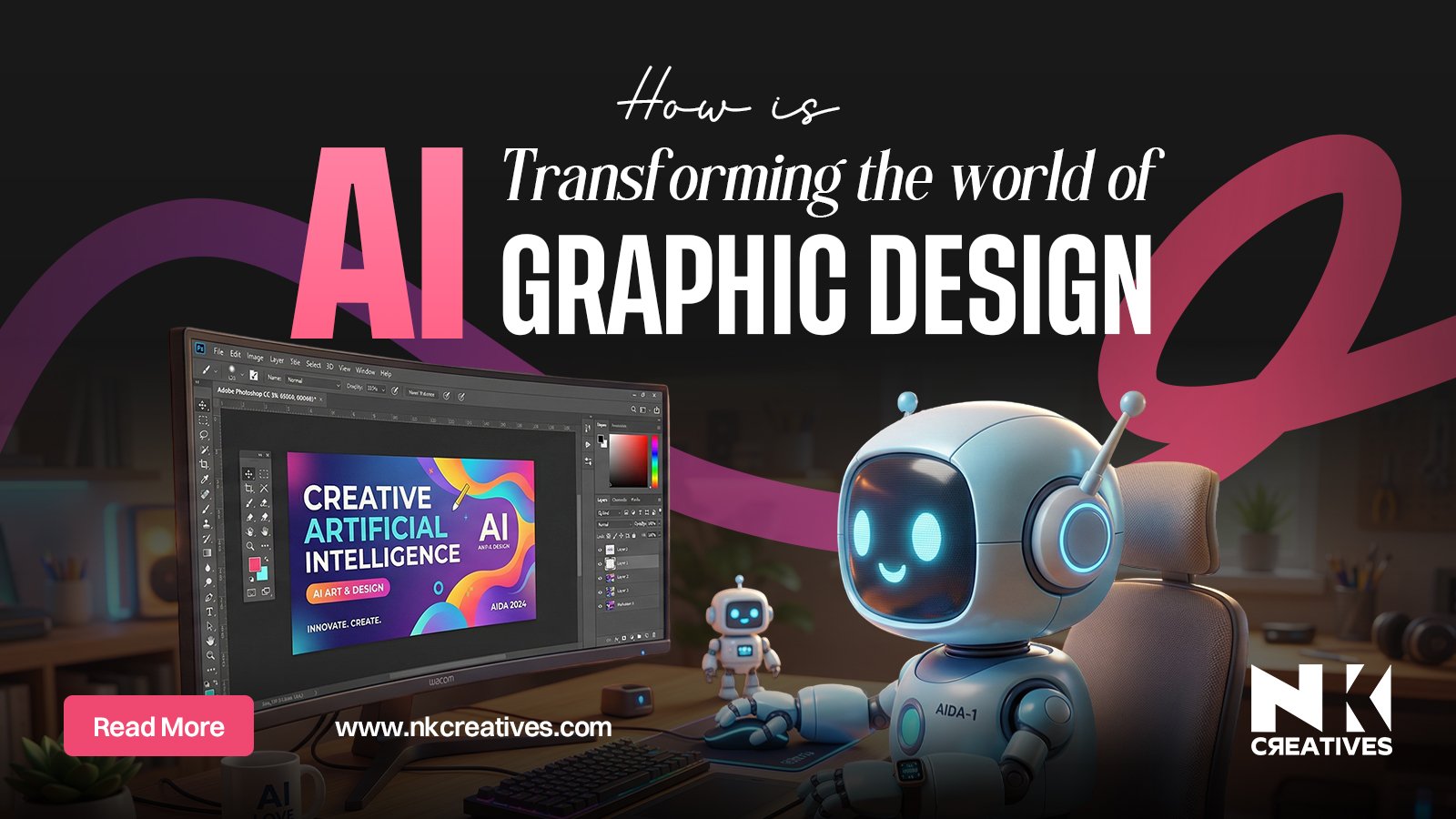
How is AI transforming the world of graphic design?
Introduction
Artificial Intelligence no longer remains an unrealistic fantasy; it's a powerful tool transforming the creative industry, particularly graphic design. Consider this article a comprehensive guide to educate yourself on the transformative power of AI in graphic design. We will also examine the role of AI in making our work easier, automating boring jobs, and creating new creative opportunities.
We will also look into the ethical challenges of using AI in graphic design, including issues of originality and copyright. Finally, we will explore emerging trends and the role of the human designer in the exciting field.
What is AI in graphic design?
In the case of artificial Intelligence in graphic design, it is the imitation of human creativity using technology. It is like having a partner in the creative process instead of replacing human creativity. AI is revolutionizing the graphic design industry through technology. It is making the creative process more efficient. There are two types of AI tools used in the creative process: generative tools that can generate images from text, and AI-assisted tools that can assist in the creative process by selecting color schemes or creating designs.
The role of AI in creativity is to make things more efficient, for example, by automating repetitive processes. In this regard, AI can be very helpful, for example, by automatically resizing images or removing backgrounds. This can give the designer more time to work on creative aspects of design. Additionally, AI can generate design ideas based on input, inspiring creative directions. In general, AI can make things more efficient and offer more choices.
Benefits of AI in Graphic Design
The use of artificial intelligence is changing graphic design. It provides many benefits that help designers and brands. AI tools make the design process faster and open up new creative possibilities.
Increase efficiency and productivity
The use of AI tools makes the process easier and more efficient. For instance, the tools reduce the workload associated with repetitive tasks, enabling the designer to engage in more complex and creative tasks. Additionally, the tools offer the advantage of creating a range of designs, mock-ups, and color palettes. These tools increase the designer's efficiency and productivity. They enable the designer to focus on refining ideas, resulting in better outcomes. As the algorithms used in the tools improve, the efficiency and productivity will also increase.
Expand Creative Possibilities
AI-driven tools provide new opportunities for creative exploration. These tools can develop original designs based on the provided parameters. This opportunity extends the boundaries of traditional designs. With AI-driven tools, designers can experiment with different styles and elements, which leads to new and unique designs. AI can analyze large amounts of visual data and determine new trends, resulting in valuable insights for designers. This allows designers to make impactful visuals.
Personalization and data-driven design
One of the benefits of AI is the creation of personalized designs. AI uses the user data it has collected to recognize patterns. This feature helps the designers create designs that appeal to the users. This ensures the customer becomes engaged with the design. The use of AI helps in the creation of data-driven designs, which ensures the designs created appeal to the clients. AI helps create designs by generating them quickly and analyzing market data.
How AI affects design workflows
AI is affecting design workflows by presenting new opportunities to enhance efficiency and explore new possibilities. AI is transforming design workflows by automating tedious tasks and providing insights.
Streamlining tedious tasks
Consider the time designers spend on tasks such as resizing images, removing backgrounds, or adjusting color balance. AI helps designers in streamlining tedious tasks by automating them. There are various AI tools, such as background removers and image upsizers, that can streamline tasks and speed up workflows.
Automate Layout and Composition
In addition, AI can be employed to aid with layout and composition. One can envision how AI can be employed to create various layouts or explore various color combinations. New technologies have the potential to create layouts and even personalize the user experience. This will not only save time but will also allow the designer to explore various possibilities and be creative with their designs.
Make data-driven design decisions
Designers can now use AI to analyze data, gather feedback, and create various designs. This feature will allow the designer to make informed design decisions, resulting in effective designs that resonate with their audience. AI algorithms can be incorporated to create effective designs and speed up the product development cycle.
Challenges and Ethical Considerations.
AI is an exciting technology in the realm of graphic design; however, it raises significant ethical considerations.
Balance Automation with Creativity
AI is quite useful in the realm of automation; it can be used to resize images or adjust color tones in graphic design. With the help of AI, the designer can be more creative; however, it is important not to rely too heavily on AI tools, as this might end up stifling creativity. The designer should use AI tools without compromising their creativity.
Embrace an AI-driven Workflow
The creative world is undergoing an evolution with AI tools that automate processes such as image resizing and background removal. However, it is essential to note that AI is not replacing graphic design but rather complementing it. By embracing AI, graphic designers become more efficient, unveiling creative possibilities through personalized design recommendations. Those who adopt this evolution will thrive in the future.
Develop AI literacy and tool proficiency
Graphic designers need to understand how AI tools work, which is essential for developing AI literacy skills. This skill helps them make informed choices about AI tool use in graphic design. AI graphic design tools make product design more innovative and efficient. It is imperative to understand specific AI tools, as those who take the time to learn can utilize them to the fullest. As AI constantly evolves graphic design tools, staying up to date with learning is essential.
Combine AI capabilities with human expertise
Although AI has immense capabilities, human expertise remains irreplaceable. The successful designers of the future would be those who can harness the capabilities of both. AI can help in technical work and in creating design variations. However, human creativity remains the key in setting directions, making strategic decisions, and adding the finishing touches that make the design special. AI must be seen as an aid to human capabilities. The use of AI tools would help designers unleash new creativity. Recognizing the limitations of AI and clearing the misconceptions about it would help designers harness the capabilities of AI. The future of graphic design would be about the combination of human creativity and AI.
Conclusion
In brief, the emergence of artificial intelligence in graphic design has a major impact on the creative process, increasing efficiency and creativity. However, it is essential to consider ethical issues concerning originality and copyright as artificial intelligence becomes an essential component of creative processes. In conclusion, it is evident that, despite artificial intelligence being an essential tool in graphic design, it is essential to consider the role of human beings, as they ensure that innovation and art coexist.
.jpg)
.jpg)





.jpg)